Nervecept® formula & order desk · Cycle 2026 · U.S. stock · Payment runs on the maker's BuyGoods checkout
Order Now • From $49
Vegetable capsules · 1 a day before a meal

Nervecept: Daily Capsules for Nerve Function Support

Nervecept is a one-a-day capsule made to support nerve comfort and function in the hands and feet, alongside blood-sugar control, movement and regular check-ups. Take one capsule with 8 oz of water 20 to 30 minutes before a meal; each capsule lists 500 mg of glucosamine sulfate, 67 mg of Indian frankincense and six smaller actives, 699 mg in all. It is not a neuropathy medicine or a gabapentin-type prescription drug. Bottles run from $49 in the 6-pack with a 60-day money-back window.

  • Secure BuyGoods checkout
  • 60-day money-back window
  • Free U.S. shipping on 3+
30 capsules699 mg activesNo proprietary blendContains shellfish
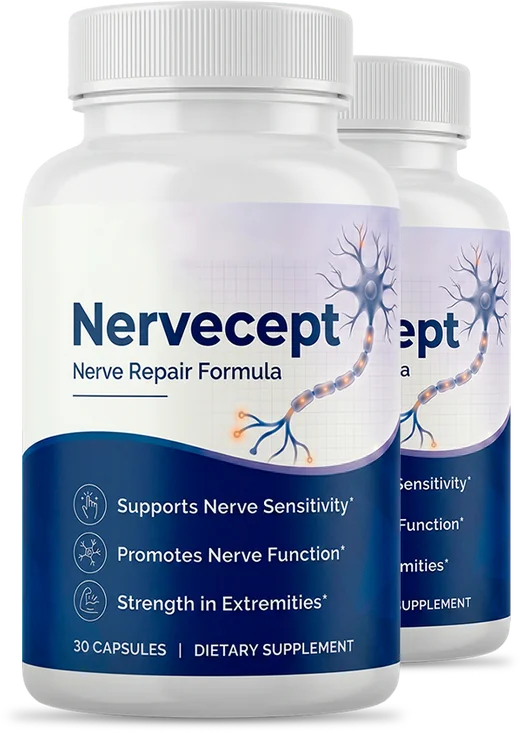
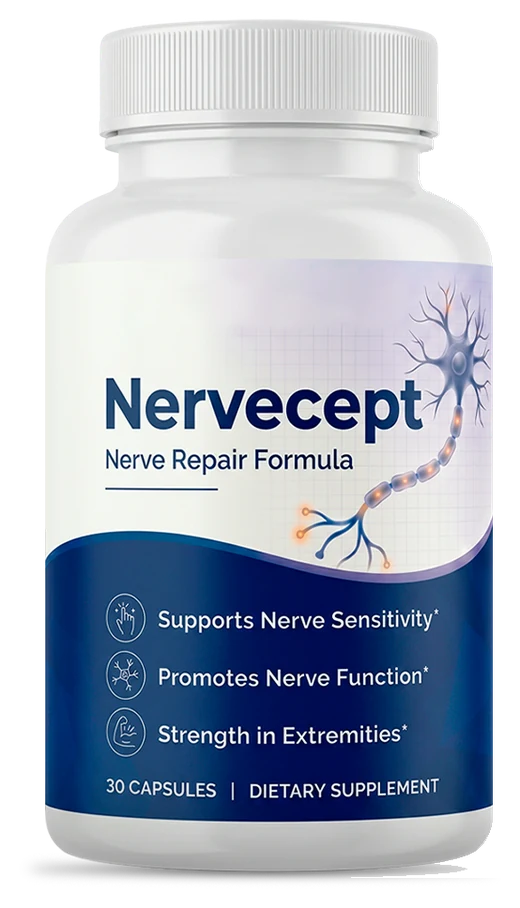
Nervecept Nerve Repair Formula bottle, 30 capsules dietary supplement

Per capsule · printed label

Glucosamine sulfate500 mg
Indian frankincense (herb)67 mg
Chondroitin sulfate50 mg
Turmeric root50 mg
Quercetin · Methionine · MSM · Bromelain8 mg each
Executive summary

Nervecept at a glance

Six lines that answer most first questions. Each figure comes from the bottle or from the maker's own order page, not from an ad.

Primary role

Comfort support for hands and feet

Sold as a nerve formula; the label's own claims are "supports nerve sensitivity", "promotes nerve function" and "strength in extremities".

Serving & form

1 capsule, 30 per bottle

Vegetable (hypromellose) capsule with rice flour as filler, taken with 8 oz of water before a meal.

Key actives

Glucosamine 500 mg + 7 more

Boswellia 67 mg, chondroitin 50 mg, turmeric 50 mg, then quercetin, methionine, MSM and bromelain at 8 mg each.

Manufacturing

Made in the USA

The label says U.S.-made with globally sourced ingredients and names Gex Corporation LLP of Ogden, Utah as distributor.

Price tiers

$49 to $79 a bottle

$79 each for 2 bottles, $69 for 3, $49 for 6. Shipping is $9.99 on the 2-pack and free on the larger packs.

Trial window

60 days, empty bottles accepted

Refunds start by email to the support desk; bottles go back to a Utah PO box at your cost.

Short version

Nervecept in 60 seconds

  1. What it is, and what it is not. A low-dose capsule built mostly from joint-support ingredients and marketed for nerve discomfort. It is a dietary supplement, not a drug, it has never been tested as a finished formula in a published trial, and it does not treat neuropathy.
  2. How you take it. Swallow one capsule with a full glass of water, 20 to 30 minutes before a meal, once a day. One bottle is one month. There is nothing to mix, measure or refrigerate.
  3. Who it suits. Adults with mild, already-diagnosed discomfort in the hands, feet or joints who want a simple daily routine, who are not allergic to shellfish, and who accept that the doses are far below the research amounts.
  4. What happens if it does nothing. Email the support desk inside 60 days, ship every bottle back (even empty ones) to the Ogden, Utah PO box, and the product price is refunded to your card. You pay the return postage.
The reasons behind the search

Why people look for a nerve support supplement like Nervecept

People rarely reach for a nerve formula out of curiosity. They reach for it after weeks or years of sensations that do not show up on the outside and are hard to explain to family. Peripheral neuropathy, damage to the nerves outside the brain and spinal cord, affects millions of Americans, and the most common pattern starts in the toes and climbs slowly upward in a "stocking" distribution[1]. Four experiences come up again and again.

Burning or pins-and-needles feet at night

Symptoms often feel worse in bed, when there is nothing else competing for the brain's attention and the sheets brush against sensitive skin. Many buyers describe a burning, buzzing or electric feeling that steals sleep. Night-time worsening is a typical feature of small-fiber nerve involvement and one reason sleep shows up so often in neuropathy questionnaires.

Numbness and balance worries

Large-fiber nerves carry position sense. When they are affected, the floor can feel "far away", stairs feel uncertain and falls become a real risk, particularly for older adults. A review in JAMA lists reduced vibration and position sense among the core exam findings of distal symmetric polyneuropathy, the most common form[2].

A diagnosis that came with few options

Diabetes is the leading cause of neuropathy in the United States, and roughly half of people with diabetes develop some degree of it over time[3][4]. The approved drugs, such as pregabalin, duloxetine and gabapentin, treat pain rather than repair nerves, and they come with drowsiness or dizziness for some people. That gap drives many patients toward supplements, often without telling their doctor.

Pill fatigue and simple routines

Most buyers already take several tablets a day. A single capsule once a day is easy to fit in, which is a genuine practical advantage of Nervecept's format, separate from any question about results.

When a supplement is the wrong first step: weakness that is getting worse, numbness that spreads quickly over days, symptoms on only one side, a foot wound that will not heal, or loss of bladder or bowel control. These need a medical evaluation, and MedlinePlus lists several of them as reasons to see a provider promptly[5]. A long-standing deficiency matters too: metformin, the most prescribed diabetes drug, can lower vitamin B12 over the years, and low B12 itself causes neuropathy[6]. A simple blood test can find it, and Nervecept contains no B12.

Plain definition

What is Nervecept?

Nervecept is a dietary supplement capsule sold online under the name "Nervecept Nerve Repair Formula". Each bottle holds 30 capsules, one month at the label's dose of one capsule a day. The bottle names Gex Corporation LLP, PO Box 12730, Ogden, UT 84412 as distributor, with a phone line of +1 (507) 448-8190 and the support address [email protected]. The checkout runs on BuyGoods, a U.S. payment and order platform that charges your card and emails the receipt.

Chemically, the formula is an eight-ingredient mix dominated by glucosamine sulfate, an amino sugar that the body uses to build cartilage and other connective tissue. Glucosamine sold in supplements is usually extracted from crustacean shells, which is why the label carries a shellfish (crayfish) allergen statement. The other seven ingredients are either plant extracts with anti-inflammatory research (boswellia, turmeric, quercetin, bromelain) or sulfur-containing compounds (chondroitin, MSM, methionine).

Under U.S. law it is a food product in capsule form. The FDA does not review dietary supplements for safety or effectiveness before sale; the company is responsible for what it puts on the label and must keep claims at the level of "supports", not "treats"[31].

What it is not
  • Not a prescription nerve-pain drug like pregabalin, gabapentin or duloxetine.
  • Not an approved treatment for diabetic or any other neuropathy.
  • Not a B-vitamin formula: no B1, B6 or B12 appear on the panel.
  • Not a proprietary blend: all eight actives have printed amounts.
  • Not suitable for anyone allergic to shellfish, per the label.

The maker's sales page shows pictures of vitamin B12, thiamine, biotin and spirulina, and one FAQ answer mentions biotin. None of those are in the Supplement Facts panel. The panel is the legal list; trust it over the artwork.

Mechanisms, with the evidence level attached

How is Nervecept supposed to work?

The maker describes a "neuroactive combination" that protects nerve endings and calms inflammatory signals. Here is what each part of the formula can and cannot plausibly do, written so you can weigh it yourself.

Connective tissue building blocks

Glucosamine and chondroitin are raw materials for glycosaminoglycans, the long sugar chains that give cartilage its cushion. In joints, that is a direct and plausible role. Around nerves the link is indirect: nerves run through tissue that also contains these molecules, but no human trial has measured nerve outcomes after glucosamine. The label's phrase "strength in extremities" fits this lane better than "nerve repair" does.

Boswellic acids and the 5-LOX pathway

Boswellia resin contains boswellic acids, including AKBA, that inhibit 5-lipoxygenase, an enzyme that produces leukotrienes, messengers of inflammation[16]. Trials in knee osteoarthritis used extracts standardized to these acids. Nervecept lists 67 mg of "herb" without a standardization figure, so the actual boswellic acid content is unknown.

Curcumin and NF-kB signaling

Curcumin, the yellow pigment in turmeric, dampens NF-kB, a master switch for inflammatory genes, in lab studies. The catch is absorption: curcumin is poorly absorbed and quickly cleared, a problem researchers have called a key barrier to its use[18]. Nervecept uses plain turmeric root at 50 mg, with no black pepper extract or other absorption aid.

Quercetin, MSM and bromelain

Quercetin is a plant flavonoid with antioxidant activity[21]; MSM supplies sulfur and has knee-pain trials at several grams a day[22]; bromelain is a pineapple enzyme mix studied for swelling[24]. At 8 mg each they read as supporting cast, present on the label but far from the amounts studied.

What nerve research actually uses

The supplement with the most neuropathy-specific data is alpha-lipoic acid at 600 mg a day, which reduced symptom scores in a meta-analysis and in the oral SYDNEY 2 trial[25][26]. Vitamin B12 matters when it is low. Neither is in Nervecept, which is the clearest gap between the name and the formula.

Why the combination idea is limited

Combining several anti-inflammatory ingredients at small doses is a common supplement strategy, on the theory that effects add up. That is possible but unproven; no published study has tested this eight-ingredient mix, so any "synergy" claim is a hypothesis rather than a finding.

Eight monographs, paired with their research

What are the ingredients in Nervecept?

Each ingredient below sits next to a short read of the human research. The doses in brackets are the amounts printed on the Nervecept label for one capsule.

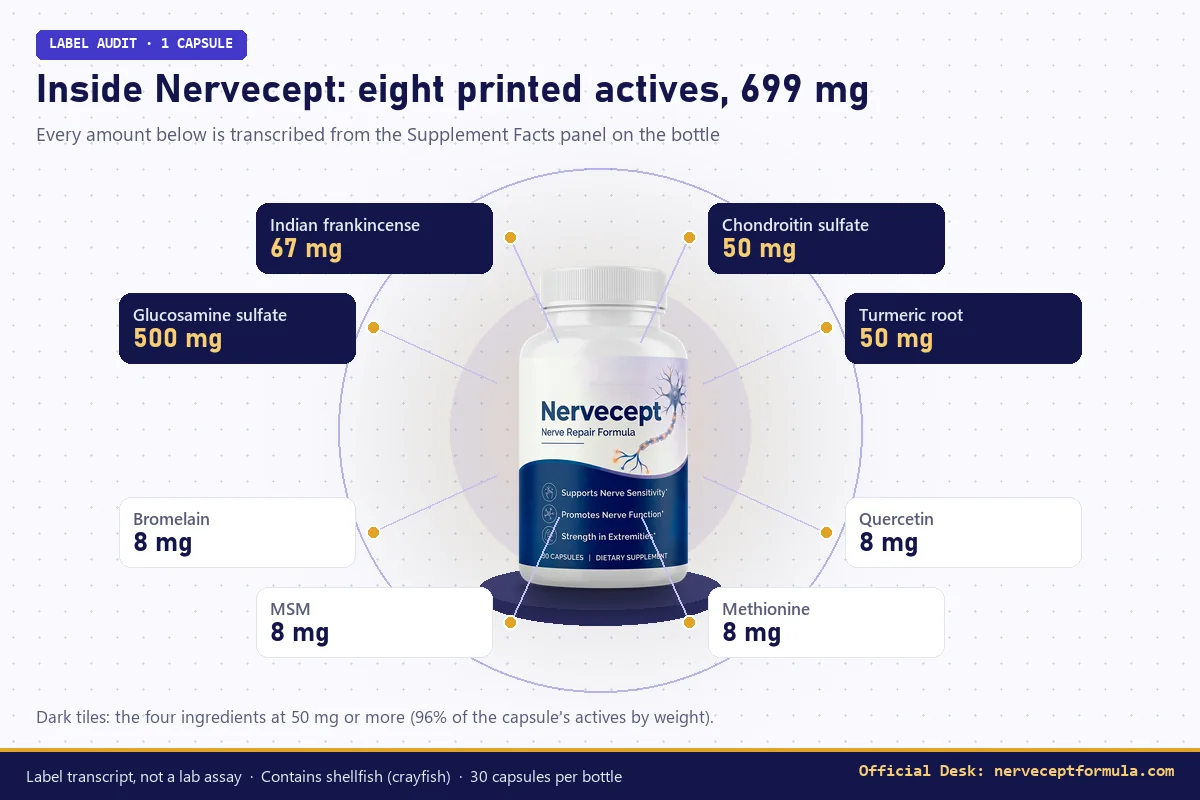
Radial infographic of the eight Nervecept ingredients and their milligram amounts around the bottle
Figure 1: The eight label lines orbiting the bottle. Dark tiles mark the four ingredients at 50 mg or more, which make up 96% of the capsule's actives by weight.

Glucosamine sulfate (500 mg)

An amino sugar the body makes from glucose and glutamine and uses to build cartilage, tendons and ligaments. Supplement glucosamine is usually harvested from the shells of crabs, shrimp or, in this case, crayfish. It is the backbone of the formula, accounting for 72% of the capsule's active weight.

Glucosamine: the research

Results depend on the dose, the salt and the study. A Belgian trial gave 1,500 mg of glucosamine sulfate daily for three years and saw less joint-space narrowing than placebo[9]. The large U.S. GAIT trial found no overall pain benefit over placebo for glucosamine hydrochloride[7], and a network meta-analysis concluded the effects were not clinically relevant[11]. A Cochrane review noted that results looked better with one pharmaceutical-grade preparation than with others[8]. Nerve outcomes were not measured in any of them.

Indian frankincense, Boswellia serrata (67 mg)

A gum resin used in Ayurvedic medicine for joint swelling. Its active compounds are boswellic acids. The label calls it "herb" without a percentage, which usually signals a raw or lightly processed powder rather than a concentrated extract.

Boswellia: the research

In a 90-day knee trial, an extract enriched to 30% AKBA improved pain and function at 100 mg and 250 mg a day[14]. A 2020 meta-analysis pooled seven trials and found improvements in pain, stiffness and function in osteoarthritis[15]. These used standardized extracts, which deliver far more boswellic acid per milligram than 67 mg of unstandardized herb is likely to.

Chondroitin sulfate (50 mg)

A long sugar chain that holds water inside cartilage and is often sold together with glucosamine. Like glucosamine, it is usually of animal origin (bovine, porcine or marine cartilage); the label does not specify the source.

Chondroitin: the research

A Cochrane review of 43 trials judged that chondroitin may give a small to moderate short-term improvement in osteoarthritis pain, with evidence of low quality and doses usually between 800 and 1,200 mg a day[12]. The National Center for Complementary and Integrative Health summarizes the overall picture for glucosamine and chondroitin as mixed[13]. At 50 mg, Nervecept carries roughly 4% to 6% of the studied amount.

Turmeric root, Curcuma longa (50 mg)

The ground root of the spice plant. Turmeric powder is typically a few percent curcumin by weight, so 50 mg of root likely supplies only a milligram or two of curcumin. No piperine or absorption technology is listed.

Turmeric: the research

A meta-analysis of randomized trials in joint arthritis found that turmeric extracts, usually around 1,000 mg of curcumin a day, reduced pain scores compared with placebo[17]. Black pepper's piperine raised curcumin blood levels about twenty-fold in a classic human study[19]. NCCIH notes that turmeric is likely safe at normal doses but that high-dose products have been linked to liver injury in rare cases[20].

Quercetin and methionine (8 mg each)

Quercetin is a flavonoid found in onions, apples and the Sophora japonica buds named on the label. Methionine is an essential amino acid that the body uses to make proteins and the antioxidant glutathione; a normal diet supplies well over a gram a day.

Quercetin and methionine: the research

Human quercetin studies typically use 500 to 1,000 mg a day, and most of its anti-inflammatory evidence comes from cell and animal work[21]. There are no symptom trials of methionine for nerve or joint comfort. At 8 mg, both ingredients are present but nutritionally negligible.

MSM and bromelain (8 mg each)

MSM (methylsulfonylmethane) is an organic sulfur compound found in small amounts in food. Bromelain is a group of protein-digesting enzymes from pineapple stem, usually labeled by activity units (GDU) rather than by weight.

MSM and bromelain: the research

The MSM knee trials used 3 to 6 grams a day for 12 weeks and saw modest pain improvements[22][23]. A review of bromelain in osteoarthritis found mixed results at doses that were mostly hundreds of milligrams or more[24]. Eight milligrams is several hundred times below the MSM trial range.

The section most sales pages leave out

Nervecept dosage vs. research dosage: an honest look

The doses are small, and no clinical study tested this exact formula

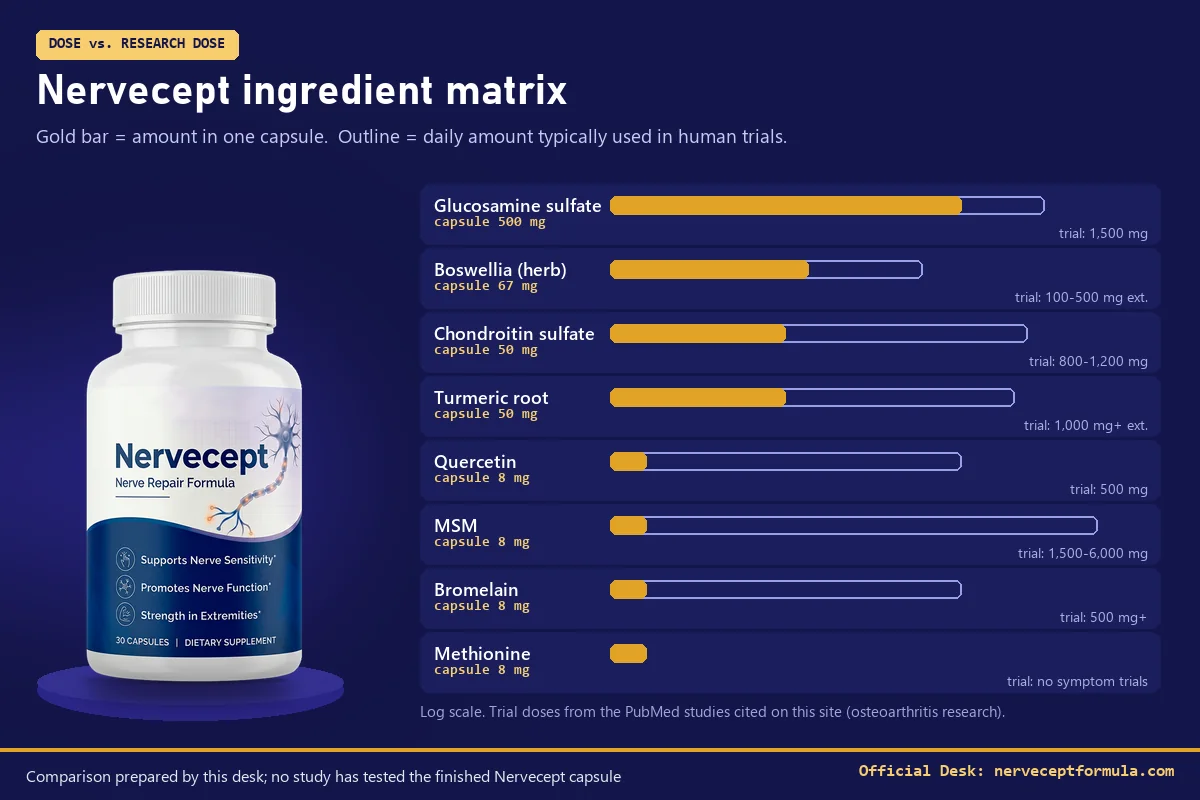
The Nervecept sales page says the formula contains its ingredients "in the ideal dosage". Set the label next to the trials that made these ingredients famous and a different picture appears. Glucosamine is the closest to a research dose, at a third of the 1,500 mg a day used in the long-term trials[9][10]. Everything else sits between roughly 1% and 25% of the amounts studied, and the four 8 mg ingredients are effectively label decoration.

Bar chart comparing Nervecept's per-capsule doses with daily doses used in human trials
Figure 2: Gold bars show what one Nervecept capsule supplies; outlined bars show the daily amounts typically used in the cited human trials (log scale).
IngredientPer capsuleTypical trial dose per dayShare of trial dose
Glucosamine sulfate500 mg1,500 mg33%
Boswellia serrata67 mg herb100-250 mg standardized extractLower than it looks: unstandardized
Chondroitin sulfate50 mg800-1,200 mg4-6%
Turmeric root50 mg~1,000 mg curcumin extractUnder 1% as curcumin
Quercetin8 mg500-1,000 mg1-2%
MSM8 mg3,000-6,000 mg0.1-0.3%
Bromelain8 mg500 mg or moreAbout 2%
Methionine8 mgNo symptom trialsNot applicable

Why would a company formulate this way? Glucosamine is inexpensive by weight and fills most of a capsule. Adding several more names at small amounts lengthens the ingredient list, which reads as thoroughness on a sales page. Nervecept deserves credit for one thing many competitors avoid: every amount is printed. You can do this math yourself, which is not possible with a proprietary blend.

There is also a category mismatch. The ingredients with the strongest neuropathy data, alpha-lipoic acid at 600 mg a day and B12 when it is deficient, are absent[26][6]. The American Diabetes Association's position statement focuses on glucose control and on approved medicines for painful diabetic neuropathy[27]. A buyer looking for "nerve support" should know that Nervecept's research base is a joint-comfort research base.

What this means in practice: if Nervecept helps you, it is more likely to show up as a modest change in general aches and stiffness than as a change in nerve sensation. Judge it over six to eight weeks against a written baseline, and use the 60-day window if it does not earn its place.

Transcribed panel

What does the Nervecept label say?

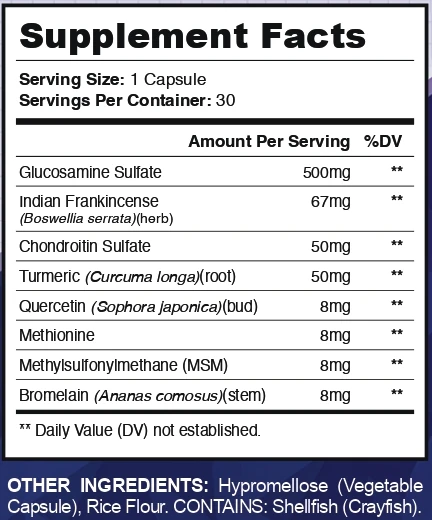
Supplement Facts

Serving Size: 1 Capsule
Servings Per Container: 30
Amount Per Serving%DV
Glucosamine Sulfate500 mg  **
Indian Frankincense (Boswellia serrata) (herb)67 mg  **
Chondroitin Sulfate50 mg  **
Turmeric (Curcuma longa) (root)50 mg  **
Quercetin (Sophora japonica) (bud)8 mg  **
Methionine8 mg  **
Methylsulfonylmethane (MSM)8 mg  **
Bromelain (Ananas comosus) (stem)8 mg  **
** Daily Value (DV) not established.
Other ingredients: Hypromellose (vegetable capsule), rice flour. Contains: Shellfish (crayfish).

Suggested use, storage and caution text are copied in substance from the bottle: one capsule daily with 8 oz of water, 20 to 30 minutes before a meal; store cool and dry away from heat and light; do not exceed the recommended dose; not for pregnant or nursing women, under-18s or people with a known medical condition without a physician's advice; do not use if the safety seal is damaged or missing.

What a certificate of analysis would add

A label is a promise; a certificate of analysis (CoA) is the receipt. A CoA for a finished batch normally reports identity and potency for each declared ingredient, heavy metals such as lead, arsenic, cadmium and mercury, and microbial counts. U.S. manufacturing rules require companies to set specifications and verify them for every batch[32], but they do not require publishing the results.

The maker does not publish a CoA for Nervecept, and this desk has not tested it. We do not print numbers we cannot source. If lab data matter to you, email [email protected] with the lot code from your bottle and ask for that lot's CoA; a company that has one can usually send it.

Reading the panel like an auditor

  • All amounts declared: eight actives, eight milligram figures, total 699 mg. That is better disclosure than most nerve formulas.
  • No %DV: none of these ingredients has an official Daily Value, so the column shows asterisks. That is normal, not a red flag.
  • "Herb", "root", "bud", "stem": these words name the plant part, and the absence of a percentage means the extracts are not standardized to an active compound.
  • Allergen line: the crayfish statement is required because crustacean shellfish is a major food allergen under U.S. law[29].
Close crop of the Supplement Facts box from the official Nervecept label artwork
The panel as printed on the maker's label artwork.
Realistic expectations

What are the benefits of Nervecept?

These are the outcomes the formula is designed around, phrased at the strength the evidence allows. The asterisk is the legal reminder that the FDA has not evaluated them.

Everyday comfort in the extremities*

The glucosamine, boswellia and turmeric research points toward modest relief of joint-type aches in hands, knees and feet, which some buyers experience as easier walking.

Support for a normal inflammatory response*

Boswellic acids, curcumin, quercetin and bromelain all act on inflammatory signaling in laboratory work, at doses higher than these.

Connective tissue building blocks*

Glucosamine and chondroitin supply the raw materials of cartilage. Whether a supplement changes cartilage in practice remains debated.

A one-capsule routine*

Once a day, no measuring, no taste, small enough to swallow easily. Adherence is what makes any eight-week trial meaningful.

What it does not do

Nervecept does not regrow or repair nerve fibers, reverse diabetic neuropathy, correct a B12 deficiency, lower blood sugar, replace pregabalin, gabapentin or duloxetine, or "eliminate" pain as the sales page puts it. The sales page also mentions "sticky toxins" building up on nerves; that is not a recognized medical concept. If your symptoms are new or worsening, the cause needs finding first[1].

Balance sheet

Nervecept pros and cons

Pros

  • Fully disclosed label: eight actives, eight milligram amounts, no proprietary blend.
  • One small capsule a day, with clear timing directions.
  • Glucosamine at a third of the classic research dose, the formula's strongest element.
  • Allergen, pregnancy and seal warnings printed on the bottle.
  • One-time purchase on the maker's checkout, no autoship.
  • 60-day refund policy that accepts empty bottles.
  • Free U.S. shipping and $49 bottles on the 6-pack.

Cons

  • Most doses are a small fraction of the amounts used in trials.
  • Boswellia and turmeric are not standardized; actual actives unknown.
  • No alpha-lipoic acid or B vitamins despite the nerve positioning.
  • Contains shellfish, which rules it out for crustacean allergies.
  • Sales page makes claims ("eliminate nerve pain", "clinically proven") the label cannot support.
  • Return postage is on you, and the box only takes mail-type shipments.
  • Only sold through the maker's own funnel.
Self-check

Is Nervecept right for you? A 30-second check

Read both columns. One item on the right is enough reason to pause and ask a clinician.

A reasonable fit if...

  • Your discomfort is mild and a clinician has already looked at it.
  • You also have joint aches in hands, knees or feet.
  • You want a single capsule rather than several.
  • You are not allergic to shellfish.
  • You can give it six to eight weeks and keep simple notes.
  • You are comfortable with a modest, uncertain effect.

Skip it or ask your doctor first if...

  • You have a shellfish or crustacean allergy.
  • You take warfarin or another blood thinner, or have surgery coming up.
  • Your symptoms are new, one-sided, spreading quickly or causing weakness.
  • You have diabetes and have never had B12 or foot checks.
  • You are pregnant, nursing or under 18.
  • You expect it to replace a prescribed nerve-pain medicine.
Daily protocol

How to take Nervecept

The bottle's directions are short. These four steps add the context that makes a trial worth something.

  1. Check your situation first

    Read the label warnings. Skip Nervecept with a shellfish allergy, during pregnancy or nursing, or under 18, and ask a doctor first if you take blood thinners or have a medical condition.

  2. Pick an anchor meal

    Choose the meal you never skip. Breakfast works for most people; a late lunch works if mornings are rushed.

  3. Swallow one capsule with 8 oz of water

    Take it 20 to 30 minutes before that meal. One capsule is the full daily serving; do not double up.

  4. Log symptoms for 6 to 8 weeks

    Score burning, tingling, numbness and sleep from 0 to 10 each evening, then compare weekly averages before your refund window closes.

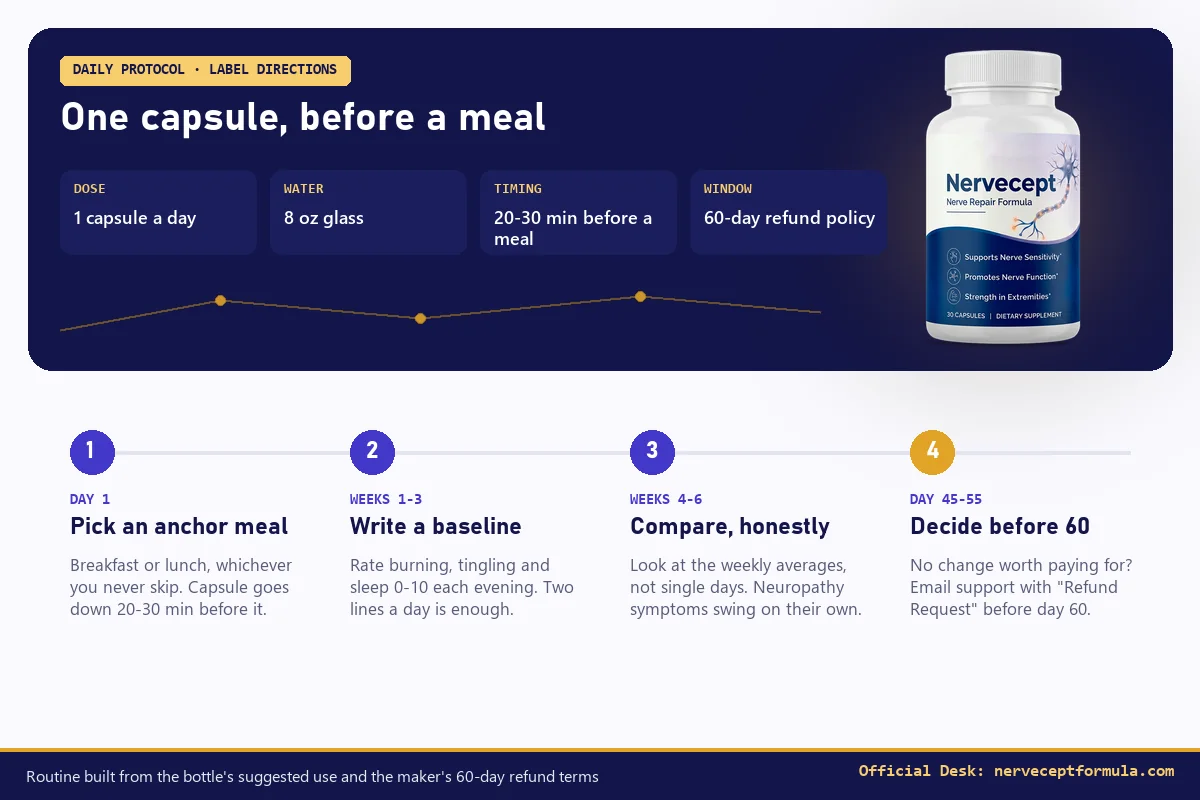
Nervecept daily protocol: one capsule with 8 oz water before a meal, plus a four-step timeline to day 60
Figure 3: The label's directions on top, and a practical four-step timeline that ends before the 60-day refund deadline.

Plan your trial and your dates

Pick a pack and the day your first capsule goes down. The planner shows the full cost including shipping, the cost per day, the date to review your notes and the last day of the 60-day window. Nothing is stored or sent anywhere; it runs in your browser.

The refund window is counted from the order date on the maker's checkout policy. One of the maker's pages counts from delivery instead; plan around the earlier date to be safe.

Total with shipping$294.00
Cost per day$1.63
Per bottle$49.00
Below list price$780.00
Review your notesDay 45
Refund deadlineDay 60
Reorder byDay 170
Daily serving1 capsule

Continue with this pack

Format

Nervecept capsules vs. drops, gummies and other forms

Many nerve products in this price range come as liquid drops or gummies. Nervecept is a conventional vegetable capsule, and that choice has trade-offs worth understanding.

Why a capsule suits these ingredients

Glucosamine, chondroitin and MSM are bulky powders with a salty or bitter taste. A capsule hides the taste completely and holds a fixed dose, so there is no guessing with a dropper. Capsules also keep well at room temperature, and the label asks only for a cool, dry place away from heat and light.

The absorption question

Sales pages for drops often promise faster "sublingual" absorption. For most of these molecules that advantage is marketing rather than pharmacology: glucosamine and chondroitin are absorbed in the gut, and the human pharmacokinetic studies of glucosamine sulfate were done with oral doses that are swallowed[10]. Curcumin is poorly absorbed whatever the format, unless it is formulated with an absorption aid[18].

The size question

The limit of a single capsule is about 700 to 800 mg of powder. That is exactly why Nervecept's amounts are small: 699 mg of actives plus rice flour fills the shell. Reaching research doses of glucosamine, chondroitin and MSM together would take five to ten large capsules a day, which is what some joint products ask. Nervecept chose convenience over dose.

FormatStrengthsWeaknesses
Capsule (Nervecept)Taste-free, exact dose, stable, easy to travel withLimited powder per capsule; must be swallowed
Liquid dropsNo swallowing; flexible dosingSmall doses per dropper, taste, preservatives, measuring errors
GummiesPleasant, easyAdded sugar, low active load, heat sensitive
PowderLarge doses possibleTaste, mixing, less portable
Ordering, step by step

How to order Nervecept in 4 steps

  1. Choose a pack

    Two, three or six bottles. The six-pack covers 180 days at $49 a bottle; the two-pack is the lowest outlay.

  2. Check out securely

    Our order buttons pass you to the maker's BuyGoods checkout, which shows the full total before you enter card details.

  3. Watch for two emails

    BuyGoods sends the receipt with your order ID; a shipping email with tracking follows when the parcel leaves.

  4. Keep your order ID

    Support needs it for any question or refund. Save the receipt email and the packing slip from the box.

Who ships it

Distributor in Ogden, Utah

The label names Gex Corporation LLP, PO Box 12730, Ogden, UT 84412. The maker does not publish its warehouse location; returns go to the same Ogden PO box.

How it travels

U.S. tracked parcel

Free on 3- and 6-bottle orders, $9.99 on the 2-pack. A "priority and insured" upgrade is offered during checkout; it is optional.

On arrival

Check the seal

The label says not to use a bottle with a damaged or missing safety seal. Our bottle check lists what to look at before opening.

The maker does not publish transit times, warehouse temperatures or carrier names, so this desk does not quote them. Store bottles as the label asks: cool, dry, away from heat and light.

Maker's checkout prices, October 2026

How much does Nervecept cost?

Three packages, all one-time purchases. The crossed-out figures are the maker's own "list" prices; nobody pays those, so judge the deal by cost per day.

2 Bottles

60-day supply

2 bottles of Nervecept
$79 / bottle

$358 → $158 total

$200 below list · $2.80/day
  • $9.99 U.S. shipping
  • No bonus guides
  • 60-day refund policy
  • One-time charge, no autoship
Order 2 Bottles
Best value · most chosen

6 Bottles

180-day supply

6 bottles of Nervecept
$49 / bottle

$1074 → $294 total

$780 below list · $1.63/day
  • Free U.S. shipping
  • 5 digital bonus guides
  • 60-day refund policy
  • One-time charge, no autoship
Order 6 Bottles · $49/ea
Good value

3 Bottles

90-day supply

3 bottles of Nervecept
$69 / bottle

$537 → $207 total

$330 below list · $2.30/day
  • Free U.S. shipping
  • 5 digital bonus guides
  • 60-day refund policy
  • One-time charge, no autoship
Order 3 Bottles

The 3- and 6-bottle packs include five downloadable guides (a nerve-renewal guide, a nighttime-habits guide, a recipe guide, a 10-day habit challenge and a usage guide). Their stated values add up to $289; they are e-books, and this desk has not reviewed their contents.

The number that matters

Nervecept price per day and best value

Because one bottle is exactly 30 days at one capsule, the cost per capsule is the cost per day. Shipping is included below.

PackageYou payDays coveredPer dayPer bottle
2 bottles$167.9960$2.80$79 + shipping
3 bottles$207.0090$2.30$69
6 bottles$294.00180$1.63$49

The six-pack is 42% cheaper per day than the two-pack. The catch is timing: the refund window is 60 days, and you would only be partway into the first of six bottles when it closes. The policy accepts unopened and empty bottles alike, so a six-pack buyer who is unconvinced at day 50 can still send all six back, but you are committing $294 up front.

For context, plain glucosamine sulfate at 1,500 mg a day is widely sold for well under a dollar a day. What Nervecept adds for the price is the seven-ingredient combination in one capsule and the refund policy, not a higher glucosamine dose. Our view: the three-pack is the sensible middle if you are unsure, and the six-pack only makes sense once you know it helps.

Interaction and tolerance review

Is Nervecept safe? Side effects and interactions

At these doses, the ingredients have a long safety record in healthy adults. The real risks are specific and predictable, which makes them easy to screen for.

Side effects reported for the ingredients

  • Digestive: mild nausea, heartburn, gas, diarrhea or constipation are the most common complaints with glucosamine and chondroitin[13]; turmeric and bromelain can add stomach upset in sensitive people.
  • Allergy: the label declares shellfish (crayfish). A small study found no immediate reactions when shellfish-allergic patients took glucosamine[28], but the label warning stands and an allergist, not a forum, should make that call[29].
  • Liver: rare liver injury has been reported with high-dose turmeric products; 50 mg of root is far below those amounts[20].

Ask your doctor before you start if you...

  • take warfarin or another anticoagulant: glucosamine has case reports and FDA MedWatch reports of a raised INR with warfarin[30]; turmeric, bromelain and quercetin may also affect bleeding.
  • take antiplatelet drugs such as clopidogrel or daily aspirin, or have surgery within two weeks.
  • have diabetes: keep monitoring glucose as usual when you add any supplement, and keep your foot checks and B12 tests on schedule.
  • take chemotherapy or other drugs where antioxidants or enzyme interactions matter.
  • have asthma, glaucoma, kidney or liver disease or any condition you are being treated for, as the label's own caution covers "a known medical condition".

Do not change prescribed nerve-pain treatment. Stopping gabapentin or pregabalin abruptly can cause withdrawal symptoms. Add a supplement, if at all, on top of the plan your prescriber knows about.

Our full side effects and safety page covers each ingredient in more detail.

What to expect, week by week

How long does Nervecept take to work?

The sales page quotes buyers who felt relief in two or three weeks. The trials behind these ingredients ran for 8 to 24 weeks and measured modest changes. Plan for the longer timeline and use the refund window as a deadline, not a hope.

  1. Days 1 to 14: set the routine

    Take the capsule at the same point each day and note any stomach effects. Start a two-line evening log: burning or tingling score, and how you slept.

  2. Days 15 to 30: watch, do not judge

    Neuropathy symptoms fluctuate with weather, activity, footwear and blood sugar. Single good or bad days mean little. Keep the log going.

  3. Days 31 to 45: a fair look

    Compare your average for week five or six with week one. A drop of two points or more on a 0-10 scale is a change you would notice in daily life.

  4. Days 45 to 60: decide

    No meaningful change? Email support with "Refund Request" before day 60. Some change? Decide whether it is worth roughly $1.63 to $2.80 a day to you.

Read the full results timeline for what each stage looks like and how to keep a log that is actually useful.

The refund policy, decoded

Does Nervecept have a money-back guarantee?

Yes: 60 days, empty bottles included. The maker's pages describe it in slightly different words, so here is the process stitched together from the sales page, the checkout's return policy and the terms.

  1. Order day starts the clock

    The checkout return policy counts 60 days from the day the order was placed. Another maker page counts from delivery; use the order date to be safe.

  2. Give it about 30 days

    The sales page FAQ suggests at least 30 days of use before asking. That is advice, not a condition in the return policy.

  3. Email before day 60

    Write to [email protected] with "Refund Request" in the subject and your order ID in the body.

  4. Or call the bottle's number

    The label and checkout list +1 (507) 448-8190; the distributor's contact page also lists +1 (855) 889-3137 for text support.

  5. Mail every bottle back

    Full, opened or empty, with the packing slip and a note with your name, email and order ID, to PO Box 12730, Ogden, UT 84412.

  6. You pay return postage

    The policy says so plainly. It is a PO box, so send it by USPS with tracking; private couriers generally cannot deliver to PO boxes.

  7. Wait for the refund

    Processing is quoted at 5 to 10 days after the box arrives (the terms page says 3 to 5 business days), then your bank's own posting time.

Transparency note: why buyers ask for refunds

Common refund reasons for a formula like this

The maker publishes no refund statistics, and we will not invent a percentage. From the formula and the policy, these are the predictable reasons a buyer ends up using the window:

Expecting nerve repair

The bottle says "Nerve Repair Formula"; the ingredients are joint-support ingredients at small doses. That mismatch is the most foreseeable disappointment.

A shellfish allergy found too late

The allergen line is on the side panel, not the front. Check it before ordering, not after delivery.

No change by week six

With low doses and fluctuating symptoms, "no difference" is a common and honest outcome. That is exactly what the window is for.

Credibility check

Is Nervecept legit or a scam?

Nervecept is a real product, not a scam in the sense of taking money and shipping nothing. The checks that matter come out like this:

  • Complete label: eight actives with exact amounts, allergen statement, directions and warnings. Scam products rarely disclose this much.
  • Named company and contacts: a distributor with a Utah PO box, a phone number on the bottle and a working support email.
  • Established checkout: BuyGoods handles payment and receipts, and the sales page states there is no subscription.
  • Written refund policy: 60 days, empty bottles accepted, with a documented process.

Where caution is warranted is the marketing. The sales page says the ingredients are "clinically proven to eliminate nerve pain", which no study supports. It quotes a doctor without a name and buyers with first and last names that cannot be checked; its own disclaimer says some names were changed. The FTC's endorsement guides require testimonials to reflect typical results or be clearly qualified[34]. Legitimate does not mean miraculous: you are buying a real, modest, fully labeled capsule, and results vary.

Channels

Where to buy Nervecept

Nervecept is sold through the maker's own sales funnel and checkout. Our order buttons send you to that same checkout, with the same prices and the same refund policy.

Name check and unauthorized sellers

Search results also show near-identical names: "Nerve Cept", "Nervicept", "Nervacept" and similar. Some are typos; some are different products. The genuine bottle is white with a navy lower half, shows a glowing neuron and the words "Nerve Repair Formula", and lists 30 capsules.

If you find Nervecept on Amazon, eBay or Walmart's marketplace, it is a third-party listing. The maker's 60-day refund runs through its own support desk and requires an order ID from its checkout, so a marketplace purchase is unlikely to qualify, and you cannot know how the bottle was stored. Read our where to buy page for the full list of warning signs.

Buyer report audit

Nervecept reviews: what buyers report

We do not publish star ratings or quotes we cannot verify. Instead, here is what the available material actually contains, and how to read it.

On the maker's page

Three five-star stories

All three describe dramatic relief within two to three weeks: less burning and numbness, better sleep, walking comfortably again. The page's disclaimer notes that names may be changed and results are not typical.

The pattern to expect

Joint relief more than nerve relief

Given the formula, buyers with mixed joint and foot discomfort are the most likely to notice something. People with confirmed diabetic neuropathy should expect less.

What independent reviews lack

No verified volume yet

We found no large, independent pool of verified Nervecept reviews as of October 2026. Treat any site showing thousands of ratings with suspicion.

Common complaints about Nervecept

"It's basically a joint supplement"

Fair. Six of eight ingredients are standard joint-support actives. Buyers who expected B vitamins or alpha-lipoic acid feel misled by the "nerve repair" name.

"No change after a few weeks"

Predictable at these doses and inside a short window. Keeping a log helps you decide quickly and use the refund policy on time.

"Return shipping costs money"

The policy places return postage on the buyer and requires all bottles. Factor in a few dollars of USPS postage when deciding on a big pack.

"Countdown timers and 'limited stock'"

The sales page uses a 30-minute timer and scarcity language. Prices have been stable; there is no need to rush a health decision.

Read the full buyer report audit

Weighted audit

Our editorial score for Nervecept

6.3/10
Label transparency9.5
Dose vs. research3.0
Marketing accuracy3.5
Price per day6.5
Refund terms7.0
Safety labeling8.0

Equal weights. The score rates the product as sold, not anyone's personal result. We update it if the label, the price or the policy changes.

Who writes and reviews this Nervecept site?

This site is run by the Nervecept Formula Desk, a small editorial and order team. We are not the manufacturer or the distributor, and we earn a commission when an order is placed through our links. That commission is the same whichever pack you choose, which is why we can recommend the smaller packs to first-time buyers.

Every page is checked against three things: the label artwork, the maker's live order page and the primary research linked in the references. We do not use AI-generated testimonials, invented reviewer names, fabricated lab numbers or star ratings. Corrections go to [email protected] and are dated on the page. Our editorial board page explains the roles and the checklist.

People also ask

What people search about Nervecept

Short, direct answers to the questions that come up most in search.

Are there real Nervecept reviews?

A few. The maker's page shows three named testimonials and admits names may be changed. As of October 2026 there is no large independent pool of verified buyer reviews, so treat high star counts elsewhere with caution.

Is Nervecept legit?

Yes, it is a real, fully labeled supplement sold through BuyGoods with a 60-day refund. Its marketing claims are stronger than its evidence; legit does not mean proven.

Does Nervecept work for neuropathy?

There is no direct evidence. Its ingredients are studied for osteoarthritis pain, mostly at higher doses. It lacks alpha-lipoic acid and B12, the two supplements with the most neuropathy-specific data.

Is “Nerve Cept” the same as Nervecept?

Usually it is the same product typed with a space. Check the bottle: white top, navy bottom, a neuron graphic, "Nerve Repair Formula" and 30 capsules. "Nervicept" or "Nervacept" may be different products.

Is Nervecept just glucosamine?

Mostly. Glucosamine sulfate is 500 of the 699 mg of actives. The rest is boswellia, chondroitin and turmeric at 50 to 67 mg plus four ingredients at 8 mg each.

What does “burning feet at night” mean?

It is a common sign of small-fiber peripheral neuropathy, often linked to diabetes, prediabetes, low B12 or alcohol. It deserves a medical work-up before any supplement, including blood sugar and B12 tests.

References

Primary research and government sources used on this page, numbered to match the bracketed markers in the text. None of them studied the finished Nervecept capsule; they describe its ingredients, the condition it is marketed for, or the rules that govern supplements.

  1. 1National Institute of Neurological Disorders and Stroke. Peripheral Neuropathy. www.ninds.nih.gov/health-information/disorders/peripheral-neuropathy
  2. 2Callaghan BC, Price RS, Feldman EL. Distal symmetric polyneuropathy: a review. JAMA. 2015;314(20):2172-2181. pubmed.ncbi.nlm.nih.gov/26599185/
  3. 3Feldman EL, Callaghan BC, Pop-Busui R, et al. Diabetic neuropathy. Nat Rev Dis Primers. 2019;5(1):41. pubmed.ncbi.nlm.nih.gov/31197153/
  4. 4National Institute of Diabetes and Digestive and Kidney Diseases. Diabetic Neuropathy. www.niddk.nih.gov/health-information/diabetes/overview/preventing-problems/nerve-damage-diabetic-neuropathies
  5. 5MedlinePlus (U.S. National Library of Medicine). Peripheral Neuropathy. medlineplus.gov/peripheralnervedisorders.html
  6. 6de Jager J, Kooy A, Lehert P, et al. Long term treatment with metformin in patients with type 2 diabetes and risk of vitamin B-12 deficiency: randomised placebo controlled trial. BMJ. 2010;340:c2181. pubmed.ncbi.nlm.nih.gov/20488910/
  7. 7Clegg DO, Reda DJ, Harris CL, et al. Glucosamine, chondroitin sulfate, and the two in combination for painful knee osteoarthritis. N Engl J Med. 2006;354(8):795-808. pubmed.ncbi.nlm.nih.gov/16495392/
  8. 8Towheed TE, Maxwell L, Anastassiades TP, et al. Glucosamine therapy for treating osteoarthritis. Cochrane Database Syst Rev. 2005;(2):CD002946. pubmed.ncbi.nlm.nih.gov/15846645/
  9. 9Reginster JY, Deroisy R, Rovati LC, et al. Long-term effects of glucosamine sulphate on osteoarthritis progression: a randomised, placebo-controlled clinical trial. Lancet. 2001;357(9252):251-256. pubmed.ncbi.nlm.nih.gov/11214126/
  10. 10Persiani S, Roda E, Rovati LC, et al. Glucosamine oral bioavailability and plasma pharmacokinetics after increasing doses of crystalline glucosamine sulfate in man. Osteoarthritis Cartilage. 2005;13(12):1041-1049. pubmed.ncbi.nlm.nih.gov/16168682/
  11. 11Wandel S, Juni P, Tendal B, et al. Effects of glucosamine, chondroitin, or placebo in patients with osteoarthritis of hip or knee: network meta-analysis. BMJ. 2010;341:c4675. pubmed.ncbi.nlm.nih.gov/20847017/
  12. 12Singh JA, Noorbaloochi S, MacDonald R, Maxwell LJ. Chondroitin for osteoarthritis. Cochrane Database Syst Rev. 2015;1:CD005614. pubmed.ncbi.nlm.nih.gov/25629804/
  13. 13National Center for Complementary and Integrative Health. Glucosamine and Chondroitin for Osteoarthritis. www.nccih.nih.gov/health/glucosamine-and-chondroitin-for-osteoarthritis
  14. 14Sengupta K, Alluri KV, Satish AR, et al. A double blind, randomized, placebo controlled study of the efficacy and safety of 5-Loxin for treatment of osteoarthritis of the knee. Arthritis Res Ther. 2008;10(4):R85. pubmed.ncbi.nlm.nih.gov/18667054/
  15. 15Yu G, Xiang W, Zhang T, et al. Effectiveness of Boswellia and Boswellia extract for osteoarthritis patients: a systematic review and meta-analysis. BMC Complement Med Ther. 2020;20(1):225. pubmed.ncbi.nlm.nih.gov/32680575/
  16. 16Siddiqui MZ. Boswellia serrata, a potential antiinflammatory agent: an overview. Indian J Pharm Sci. 2011;73(3):255-261. pubmed.ncbi.nlm.nih.gov/22457547/
  17. 17Daily JW, Yang M, Park S. Efficacy of turmeric extracts and curcumin for alleviating the symptoms of joint arthritis: a systematic review and meta-analysis of randomized clinical trials. J Med Food. 2016;19(8):717-729. pubmed.ncbi.nlm.nih.gov/27533649/
  18. 18Anand P, Kunnumakkara AB, Newman RA, Aggarwal BB. Bioavailability of curcumin: problems and promises. Mol Pharm. 2007;4(6):807-818. pubmed.ncbi.nlm.nih.gov/17999464/
  19. 19Shoba G, Joy D, Joseph T, et al. Influence of piperine on the pharmacokinetics of curcumin in animals and human volunteers. Planta Med. 1998;64(4):353-356. pubmed.ncbi.nlm.nih.gov/9619120/
  20. 20National Center for Complementary and Integrative Health. Turmeric: Usefulness and Safety. www.nccih.nih.gov/health/turmeric
  21. 21Li Y, Yao J, Han C, et al. Quercetin, inflammation and immunity. Nutrients. 2016;8(3):167. pubmed.ncbi.nlm.nih.gov/26999194/
  22. 22Kim LS, Axelrod LJ, Howard P, Buratovich N, Waters RF. Efficacy of methylsulfonylmethane (MSM) in osteoarthritis pain of the knee: a pilot clinical trial. Osteoarthritis Cartilage. 2006;14(3):286-294. pubmed.ncbi.nlm.nih.gov/16309928/
  23. 23Debbi EM, Agar G, Fichman G, et al. Efficacy of methylsulfonylmethane supplementation on osteoarthritis of the knee: a randomized controlled study. BMC Complement Altern Med. 2011;11:50. pubmed.ncbi.nlm.nih.gov/21708034/
  24. 24Brien S, Lewith G, Walker A, Hicks SM, Middleton D. Bromelain as a treatment for osteoarthritis: a review of clinical studies. Evid Based Complement Alternat Med. 2004;1(3):251-257. pubmed.ncbi.nlm.nih.gov/15841258/
  25. 25Ziegler D, Nowak H, Kempler P, Vargha P, Low PA. Treatment of symptomatic diabetic polyneuropathy with the antioxidant alpha-lipoic acid: a meta-analysis. Diabet Med. 2004;21(2):114-121. pubmed.ncbi.nlm.nih.gov/14984445/
  26. 26Ziegler D, Ametov A, Barinov A, et al. Oral treatment with alpha-lipoic acid improves symptomatic diabetic polyneuropathy: the SYDNEY 2 trial. Diabetes Care. 2006;29(11):2365-2370. pubmed.ncbi.nlm.nih.gov/17065669/
  27. 27Pop-Busui R, Boulton AJ, Feldman EL, et al. Diabetic neuropathy: a position statement by the American Diabetes Association. Diabetes Care. 2017;40(1):136-154. pubmed.ncbi.nlm.nih.gov/27999003/
  28. 28Gray HC, Hutcheson PS, Slavin RG. Is glucosamine safe in patients with seafood allergy? J Allergy Clin Immunol. 2004;114(2):459-460. pubmed.ncbi.nlm.nih.gov/15341031/
  29. 29U.S. Food and Drug Administration. Food Allergies. www.fda.gov/food/food-labeling-nutrition/food-allergies
  30. 30Knudsen JF, Sokol GH. Potential glucosamine-warfarin interaction resulting in increased international normalized ratio: case report and review of the literature and MedWatch database. Pharmacotherapy. 2008;28(4):540-548. pubmed.ncbi.nlm.nih.gov/18363538/
  31. 31U.S. Food and Drug Administration. Questions and Answers on Dietary Supplements. www.fda.gov/food/information-consumers-using-dietary-supplements/questions-and-answers-dietary-supplements
  32. 32Electronic Code of Federal Regulations. 21 CFR Part 111: Current Good Manufacturing Practice in Manufacturing, Packaging, Labeling, or Holding Operations for Dietary Supplements. www.ecfr.gov/current/title-21/chapter-I/subchapter-B/part-111
  33. 33National Center for Complementary and Integrative Health. Using Dietary Supplements Wisely. www.nccih.nih.gov/health/using-dietary-supplements-wisely
  34. 34Electronic Code of Federal Regulations. 16 CFR Part 255: Guides Concerning the Use of Endorsements and Testimonials in Advertising. www.ecfr.gov/current/title-16/chapter-I/subchapter-B/part-255
Answer first

Nervecept FAQ: questions people ask

Does Nervecept cure neuropathy or repair damaged nerves?

No. Nervecept is a dietary supplement, and no study has shown that it, or any of its eight ingredients at these doses, repairs nerves or reverses peripheral neuropathy. The name on the bottle says "Nerve Repair Formula", but the evidence behind the ingredients comes almost entirely from joint and inflammation research.

Is Nervecept legit?

Yes, as a product: it has a complete Supplement Facts panel with a milligram figure for every ingredient, a named distributor (Gex Corporation LLP, Ogden, Utah), a real checkout (BuyGoods) and a written 60-day refund policy. Legit is not the same as proven, and several sales-page claims go well beyond what the label can support.

What are the ingredients in Nervecept?

One capsule lists glucosamine sulfate 500 mg, Indian frankincense (Boswellia serrata) 67 mg, chondroitin sulfate 50 mg, turmeric root 50 mg, and 8 mg each of quercetin, methionine, MSM and bromelain. Other ingredients are a hypromellose capsule and rice flour. It contains shellfish (crayfish).

How do you take Nervecept?

One capsule a day with an 8 oz glass of water, ideally 20 to 30 minutes before a meal, or as your healthcare professional directs. Do not exceed one capsule a day, which is the label's own limit.

What are the side effects of Nervecept?

Most people notice nothing. The effects reported for these ingredients are mild: stomach upset, heartburn, nausea or loose stools from glucosamine, turmeric or bromelain. The serious risks are allergy in people sensitive to shellfish and a possible interaction with blood thinners such as warfarin.

Why does a nerve supplement contain glucosamine and chondroitin?

Because the formula is built from classic joint-support ingredients. Glucosamine, chondroitin, boswellia, turmeric, MSM and bromelain are studied mainly for osteoarthritis. The maker positions them as support for comfort in the extremities; that is a reasonable description, while "nerve repair" is not.

Can I take Nervecept with gabapentin, pregabalin or duloxetine?

There is no known direct interaction between those drugs and Nervecept's ingredients, but ask your prescriber or pharmacist before combining anything with a nerve-pain medicine, and never stop or reduce a prescribed drug because you started a supplement.

How much does Nervecept cost?

On the maker's checkout: 2 bottles for $158 ($79 each, plus $9.99 shipping), 3 bottles for $207 ($69 each, free U.S. shipping) or 6 bottles for $294 ($49 each, free U.S. shipping). The 3- and 6-bottle packs add five digital guides. Every order is a one-time charge.

Is Nervecept FDA approved?

No dietary supplement is FDA approved. Supplements reach the market without pre-approval, and the FDA expects the company to make them under current Good Manufacturing Practice rules and to keep the label truthful. The Nervecept label says it is made in the USA from globally sourced ingredients.

How do I get a refund for Nervecept?

Email [email protected] within 60 days with "Refund Request" in the subject line and your order ID, follow the reply, then mail every bottle, full or empty, with a note and the packing slip to PO Box 12730, Ogden, UT 84412. Return postage is yours; the refund lands on the original card.

More questions in the full FAQ

Try Nervecept with a 60-day window

One capsule a day, a fully disclosed label, and the right to send every bottle back, empty or not, if a fair trial does not convince you. Keep a log, decide before day 60.